The Chair by the Door: Observing Your Child's Tutorial Without Stepping On the Lesson

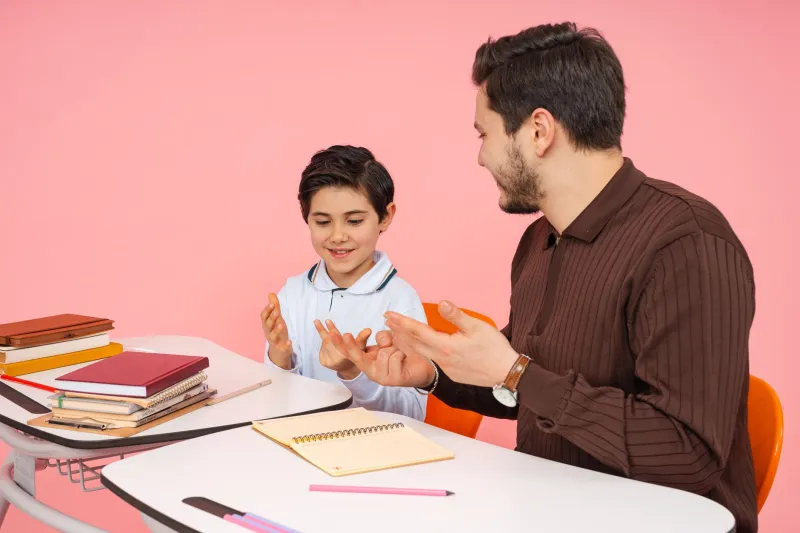
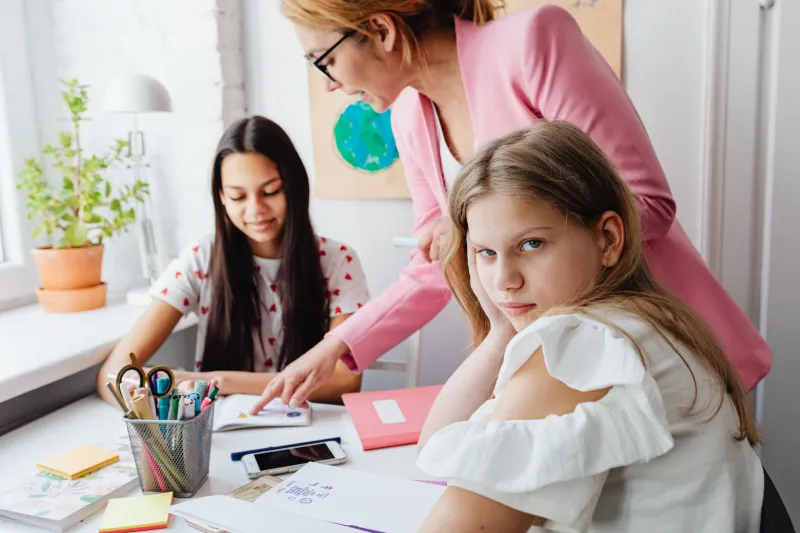
Photo: parent observing child one-to-one tutoring at kitchen table UK, via glamourandgains.com
There is a particular kind of chair in many homes. It sits slightly behind the kitchen table, or just outside the front room, and it is where a parent hovers during a tutorial. Not quite in the lesson. Not quite out of it. The chair by the door.
It is an understandable place to be. One-to-one tutoring is a significant investment, and you want to know what is happening in that hour. You want to see that your child is engaged, that the tutor is decent, and that the money is doing something useful. You may also have a child who says 'it was fine' and offers nothing else.
But a parent in the room is not a neutral presence. Even a quiet, well-behaved parent changes the atmosphere. The question is not really 'should I sit in?' It is 'what job am I doing when I sit in — and when should that job end?'
Why the chair is so tempting
For many UK parents, tutoring happens at the kitchen table, in a spare room, or online with a laptop propped on a stack of books. It can feel oddly detached. You hand over your child for an hour and hear only the murmur of voices. Sitting in feels like a sensible way to stay involved without taking over.
There is also the accountability angle. If you are paying an hourly rate, you want to see the tutor earning it. And if your child is anxious, has additional needs, or is trying tutoring for the first time, being nearby can feel like the responsible thing to do.
None of that is wrong. But observation is a tool, not a permanent arrangement. Used well, it can reassure everyone and give you useful information. Used badly, it turns a one-to-one tutorial into a three-person performance, with your child as the reluctant lead.
What changes when you sit down
Children are excellent at reading a room. If a parent is present, many will start checking in — a quick glance after an answer, a shrug in your direction, a pause before speaking. Some become more polite and less honest. They stop saying 'I don't get it' because they do not want to look confused in front of you.
Tutors feel it too. A good tutor will keep the focus on the child, but even the best can drift into explaining things to the adult in the room. The session can become a demonstration of teaching rather than a conversation with a learner.
That is the silent third person problem. You are not saying anything, but you are still part of the lesson. The aim is to be a reassuring presence, not a second teacher, a quality inspector, or a human scoreboard.
When a parent in the room genuinely helps
There are times when sitting in is clearly useful. A first tutorial with a new tutor is a common one. Your child may be nervous, and your presence can make the unfamiliar feel safer. A short stay — fifteen minutes, say — can be enough to settle everyone.
It can also help if your child has communication needs, hearing difficulties, or anxiety that makes a new adult feel daunting. In those cases, agree with the tutor and your child what your role will be. You might be there simply to help the session start, then leave at an agreed point.
Online tutorials are another practical case. Parents often stay within earshot for safeguarding and technical reasons, especially with younger children. That does not mean sitting on camera. It means being nearby, checking the platform works, and knowing when the session ends.
Some children actively ask a parent to stay. If that happens, treat it as information rather than a permanent rule. Ask why. Is the tutor new? Is the subject scary? Is something else going on? Then agree a temporary arrangement with a review date.
When it quietly gets in the way
Watch for the small signs that your presence is shifting the lesson. Your child looks at you before answering. They go quiet when they would normally chat. They start saying 'is that right?' to you rather than to the tutor. The tutor begins explaining to you rather than to them.
Teenagers often find observation especially awkward. A Year 10 student working towards GCSEs may need the tutorial to be their own space. If they say they would rather you were not in the room, take that seriously. It is not necessarily a sign that something is wrong. It is often a sign that they are growing up and want to manage the learning themselves.
There is also the correction habit. It is very hard to sit in a tutorial and not intervene when your child makes an obvious mistake. But the tutor needs to see that mistake. It tells them what to teach next. Your correction may tidy the moment and ruin the information.
A simple observation agreement
If you are going to sit in, make it a planned arrangement rather than an ambush. Before the session, agree five things with your child and the tutor.
-
Name the purpose. Are you there to reassure, to learn how the tutor works, or to check the technology? Be specific. 'I want to see how it works' is clearer than 'I'll just be around.'
-
Pick the seat. Sit slightly behind or to the side of your child, out of their direct eyeline. Avoid sitting opposite them like an interviewer. If it is online, stay off camera unless your child asks you to join.
-
Take notes, not control. Keep a small notebook or a phone note. Write down questions for the end. Do not answer for your child, correct them, or add your own explanation unless the tutor invites it.
-
Agree an exit cue. This can be simple: you will leave after fifteen minutes, or at the first natural break. For a younger child, agree a signal — a hand on the table, a notebook closed — that means you are stepping out.
-
Debrief in the right order. Ask your child first how it felt. Then ask the tutor one or two focused questions: what should be practised this week, and what would help at home? Keep it brief.
If you are staying, stay small
A useful rule is: be boring. The more interesting you are, the more the lesson bends towards you. A parent who settles quietly, takes a few notes, and leaves at the agreed time is giving the tutor and child room to work.
Avoid the running commentary. Avoid the raised eyebrow when your child gets something wrong. Avoid the post-session interrogation in the car. If you noticed something useful, save it for a calm conversation later.
The three-session test
After a few sessions, ask yourself three questions. Is my child more relaxed or more guarded when I am there? Is the tutor still speaking mainly to my child? Would the session work just as well — or better — if I were in the next room?
If the answers point towards stepping out, step out. You can still ask for a short update after each session, or agree a monthly check-in with the tutor. Being involved does not require being visible.
The chair by the door has its uses. It can be a bridge for a nervous child, a safety net for an online session, or a way to understand what good tutoring looks like. But the goal is not to keep the chair occupied forever. The goal is for your child to feel confident enough to work without you in the room. That is not a sign you are less involved. It is usually a sign the tutoring is doing its job.