When the Tutorial Goes Quiet, That's Often the Work Starting
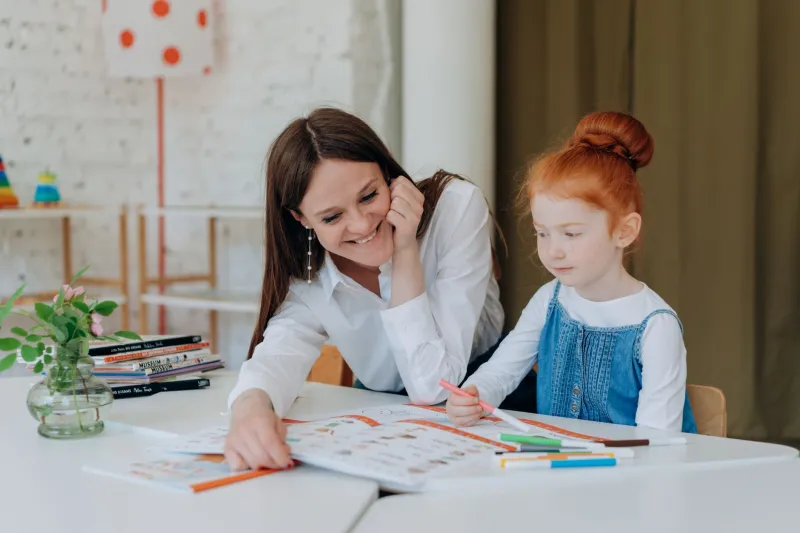
Picture the scene. Your child is in the front room with their tutor. You're making a brew, and on the way past the door you catch something unusual: nothing. No voices. No whiteboard pen squeaking. Just a long, suspicious pause. Your first thought might be that the session has ground to a halt, or that you're paying for a very expensive staring competition. It's a common worry, and an understandable one. But in one-to-one tutoring, silence is often not the absence of work. It's frequently the sound of it.
Quiet isn't the same as empty
Group classrooms are noisy places by necessity. Teachers fill gaps, manage behaviour, repeat instructions and keep a room of thirty moving. Silence can feel risky there, because it might mean lost attention. One-to-one is different. With just two people at a table, there is room for a different rhythm — one that includes thinking.
A tutor might ask a question and then deliberately say nothing. Not because they've run out of things to say, but because they want the student to do the mental work. That pause gives a child time to retrieve a fact, connect two ideas, check their own answer or decide where to start. If the adult jumps in after half a second, the student learns to wait for the rescue. If the adult holds back, the student learns to think.
The value of a proper wait
In teaching, this is sometimes called wait-time. It sounds almost too simple to matter, but it changes what happens next. A rushed question rewards the quickest guess. A question followed by a few seconds of quiet rewards actual thought. For a child who is used to being overlooked in class, or who needs longer to process language or numbers, those extra seconds can be the difference between opting out and having a go.
Good tutors use silence in small, deliberate doses. They might ask, 'What's your first move here?' and then leave the air alone. They might slide the page across and wait while the student scans it. They might sit back after an explanation and give the child a moment to notice what is still fuzzy. To an adult listening at the door, it can sound like a dead end. Inside the room, it is often the point where the learner takes over.
Silence that builds independence
There's another reason a tutorial might go quiet. Independence doesn't appear by accident. It is built by gradually removing the prompt, the hint and the helpful adult voice. A tutor who fills every pause is not really teaching a child to work alone; they are teaching them to work with a constant commentary.
So a tutor may deliberately stop talking while the student attempts a similar question on their own. They may watch rather than intervene. They may let a wrong turn unfold for a few seconds so the child can spot it themselves. That kind of quiet can feel uncomfortable to a parent, because it looks like less input. In practice, it is often the most valuable input: the chance to practise without being rescued.
What useful quiet tends to look like
Productive silence is rarely completely still. Look for small signs of engagement. The pencil might be tapping, or moving slowly. The student might be looking at the page rather than out of the window. They might be mouthing a word, counting under their breath or tracing a line with a finger. Sometimes they will look up at the tutor, not with panic, but with the beginning of a question. Then they will go back to the work.
Useful pauses are usually short and bounded. The tutor might say, 'Have a think for a moment,' or 'I'll give you ten seconds.' That framing matters. It tells the student that the quiet has a purpose and an end. It also gives the parent, if they happen to be nearby, a clue that this is planned, not lost.
When a pause should raise a flag
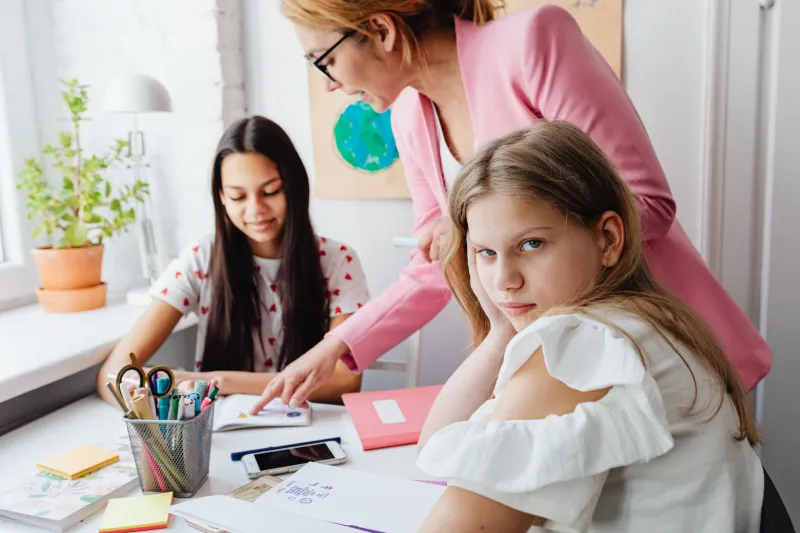
This isn't a case for pretending every silence is brilliant. Sometimes quiet does mean stuck. The difference is in what happens around it. A child who has genuinely stalled may go flat: shoulders down, eyes fixed on nothing, no attempt to write or ask. The silence may stretch on without the tutor checking in. Or the opposite may happen — the tutor may start filling the space with lots of talking while the student says nothing at all. That can be a sign that the session has slipped into a lecture rather than a conversation.
Other warning signs are repeated long pauses with no re-entry, visible distress, or a child who says after the session that they spent most of it lost. If that happens once, it may simply be a tricky topic. If it becomes a pattern, it is worth raising. Not as an accusation, but as a question: 'I noticed there were some long quiet patches — how are you finding the pace?' Tutors generally welcome that kind of feedback, because they can adjust the amount of thinking time or break the task down further.
How to raise it without hovering
It can be tempting to become a one-parent surveillance operation: hovering near the door, timing the silences, trying to work out whether the money is being well spent. Try not to. A child who feels watched may perform for the audience rather than think. And a tutor who feels second-guessed may start filling every gap just to prove they are working.
A better route is to ask your child afterwards, casually, how the session felt. 'Was there a bit where you had to think hard?' is a gentler question than 'Why was it so quiet?' You can also ask the tutor directly at a natural review point. Most tutors are happy to explain how they use thinking time and what they are looking for when they stay quiet.
Holding your nerve
If you're new to one-to-one tutoring, the quiet can take some getting used to. We're conditioned to think that help should sound like help: lots of explanation, lots of encouragement, lots of words. But a good tutorial isn't a podcast. It's a working session, and some of the most useful moments are the ones where the student is doing the mental lifting while the tutor waits.
So the next time you pass the door and hear nothing, don't assume the session has stalled. Give it a minute. You may be hearing the sound of a child working something out for themselves — which is, after all, the whole point.